How to Verify a Website Fix Before You Mark It Done
A merged change or successful deployment is not proof that a website fix works. Use this production verification method to test the real customer path and save evidence.
Read postThis blog runs on the same content system we build for clients — same schedule, same quality gate. It's the living demo of the product.

A merged change or successful deployment is not proof that a website fix works. Use this production verification method to test the real customer path and save evidence.
Read post
A location page can stay live while its hours, proof, contact path, and search signals quietly drift. Use this operational review to find the pages that need attention first.
Read post
Faceted navigation can create useful collection pages or an enormous crawl space. Use this decision method to separate durable buyer destinations from sorting, session, and low-value filter combinations.
Read post
A gallery can show taste without helping a buyer decide. Use this practical portfolio-to-page method to connect strong visual work with crawlable facts, useful selection context, and a verified inquiry path.
Read post
A bigger website scope is not automatically a better one. Use risk, repetition, dependencies, and operating capacity to choose a focused fix, a redesign project, or ongoing support.
Read post
More ad traffic does not repair a weak destination. This operator guide helps you find the earliest website failure, choose a verifiable fix, and prove the customer path works before increasing spend.
Read post
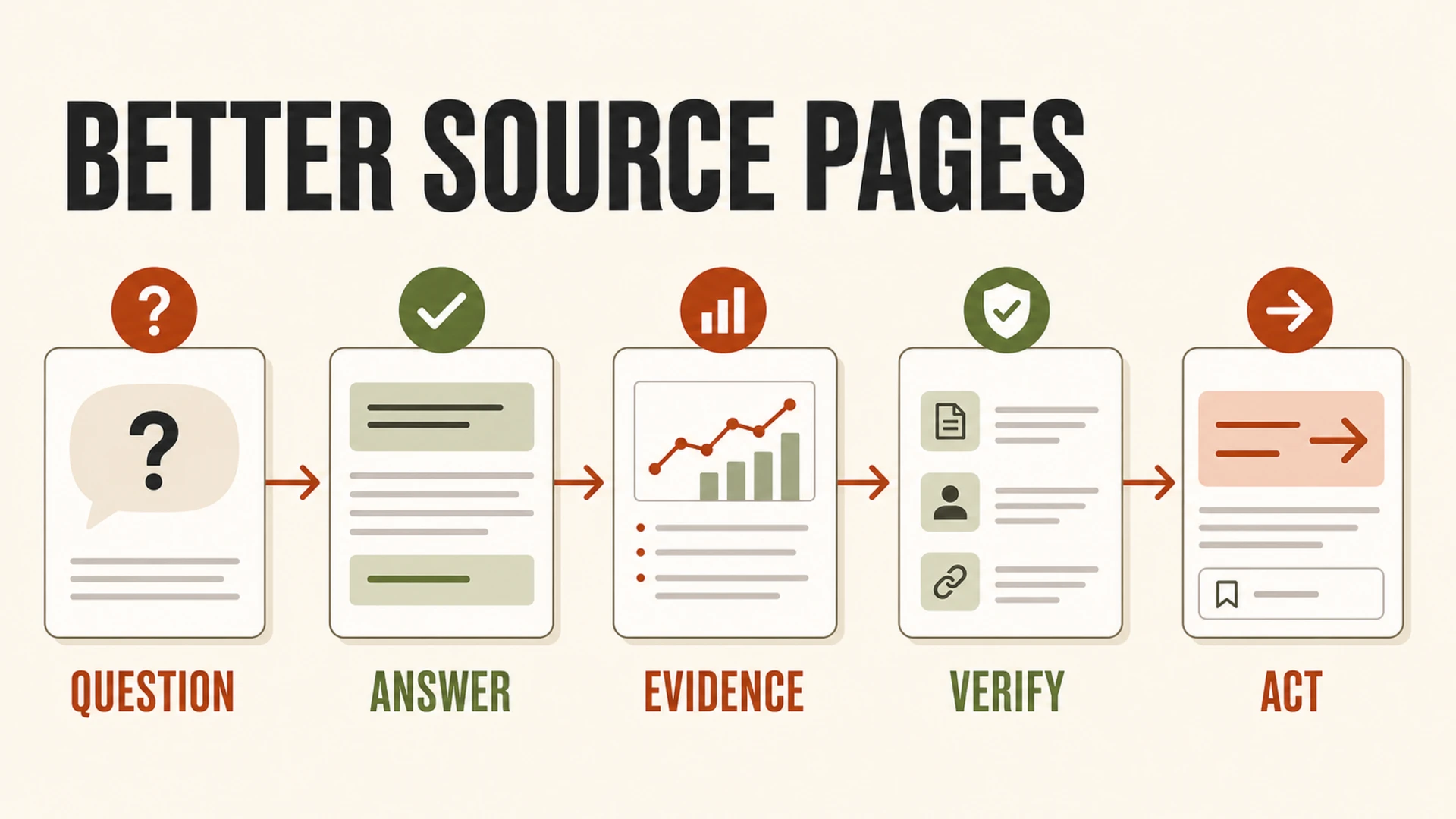
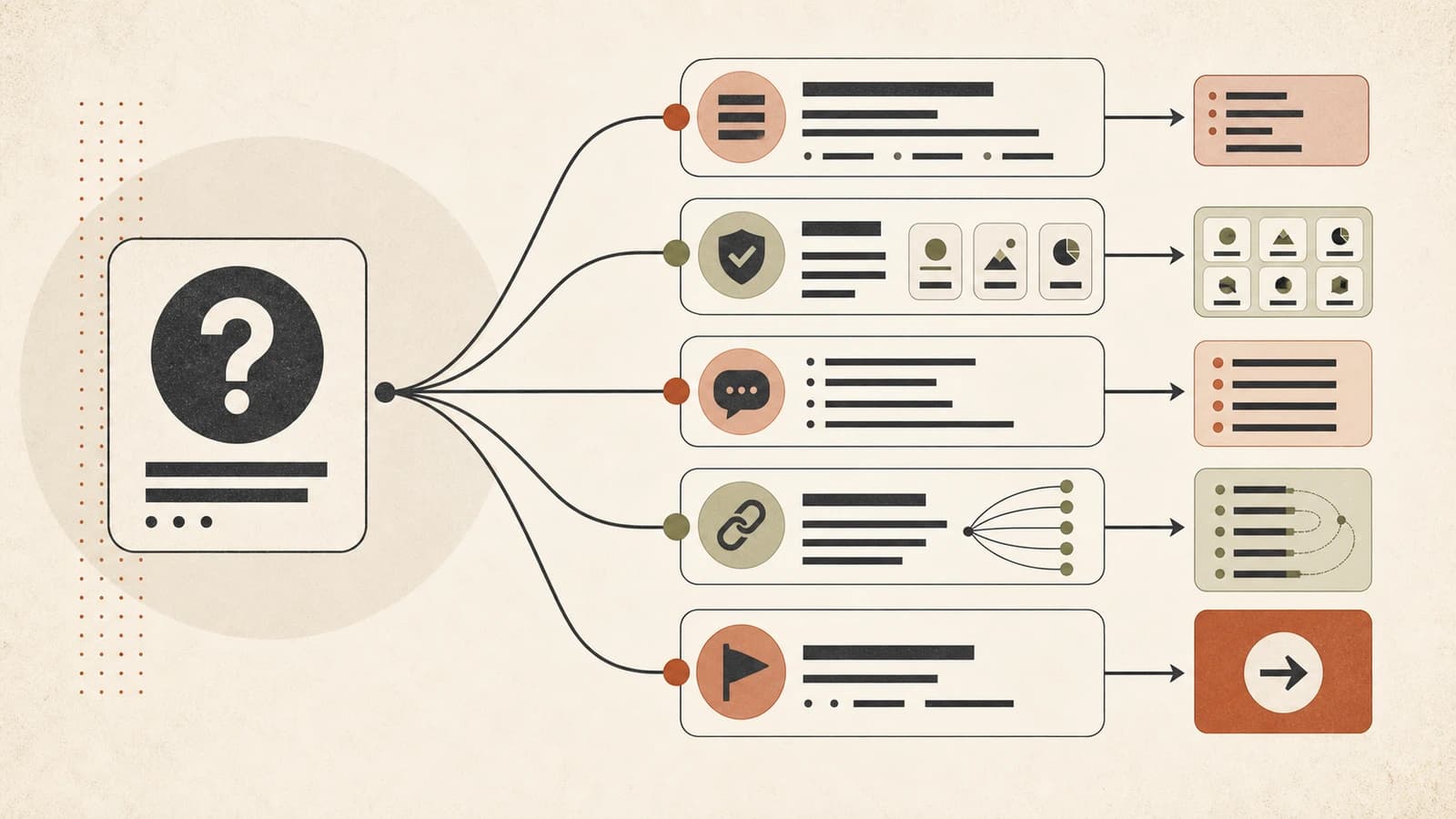
AI search can expand one buyer question into several related searches, but it cannot repair a vague service page. This operator guide shows how to turn an important page into a clear decision resource with visible answers, proof, technical access, and a useful next action.
Read post
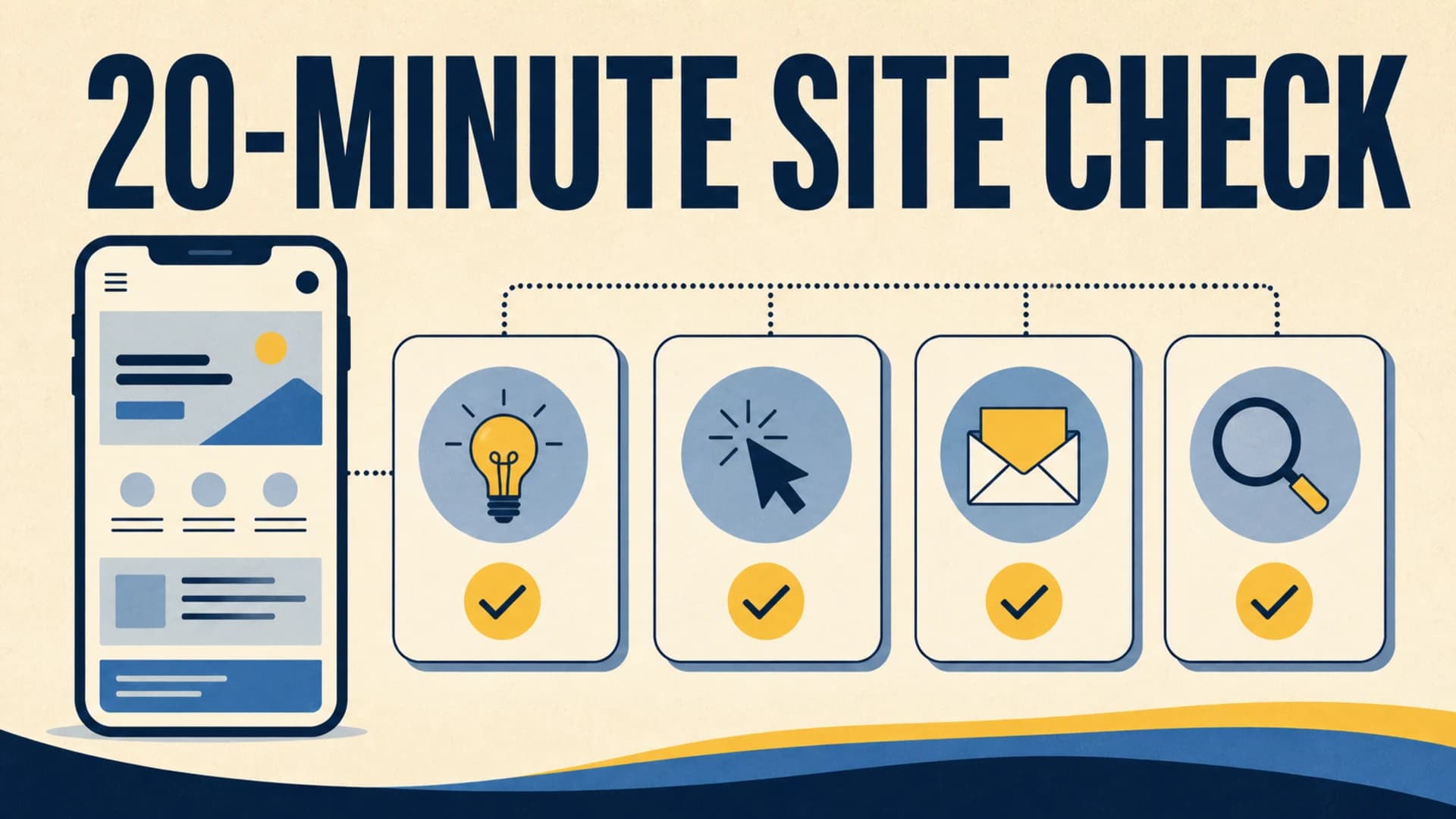
A local website can look finished while its buyer path, contact flow, search visibility, or tracking is broken. This timed owner checklist helps you find the first problem worth fixing before you pay to send more people into the site.
Read post
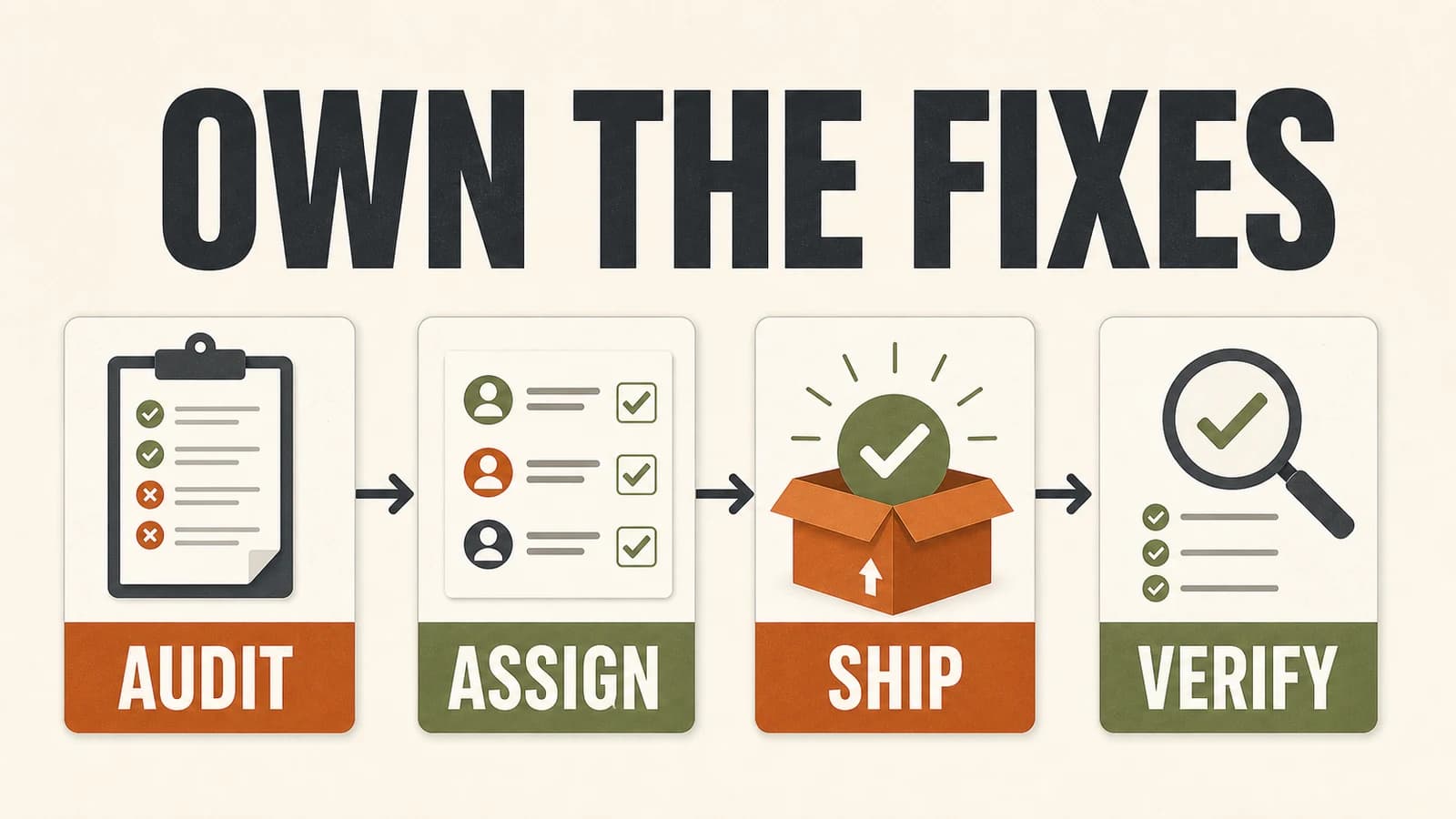
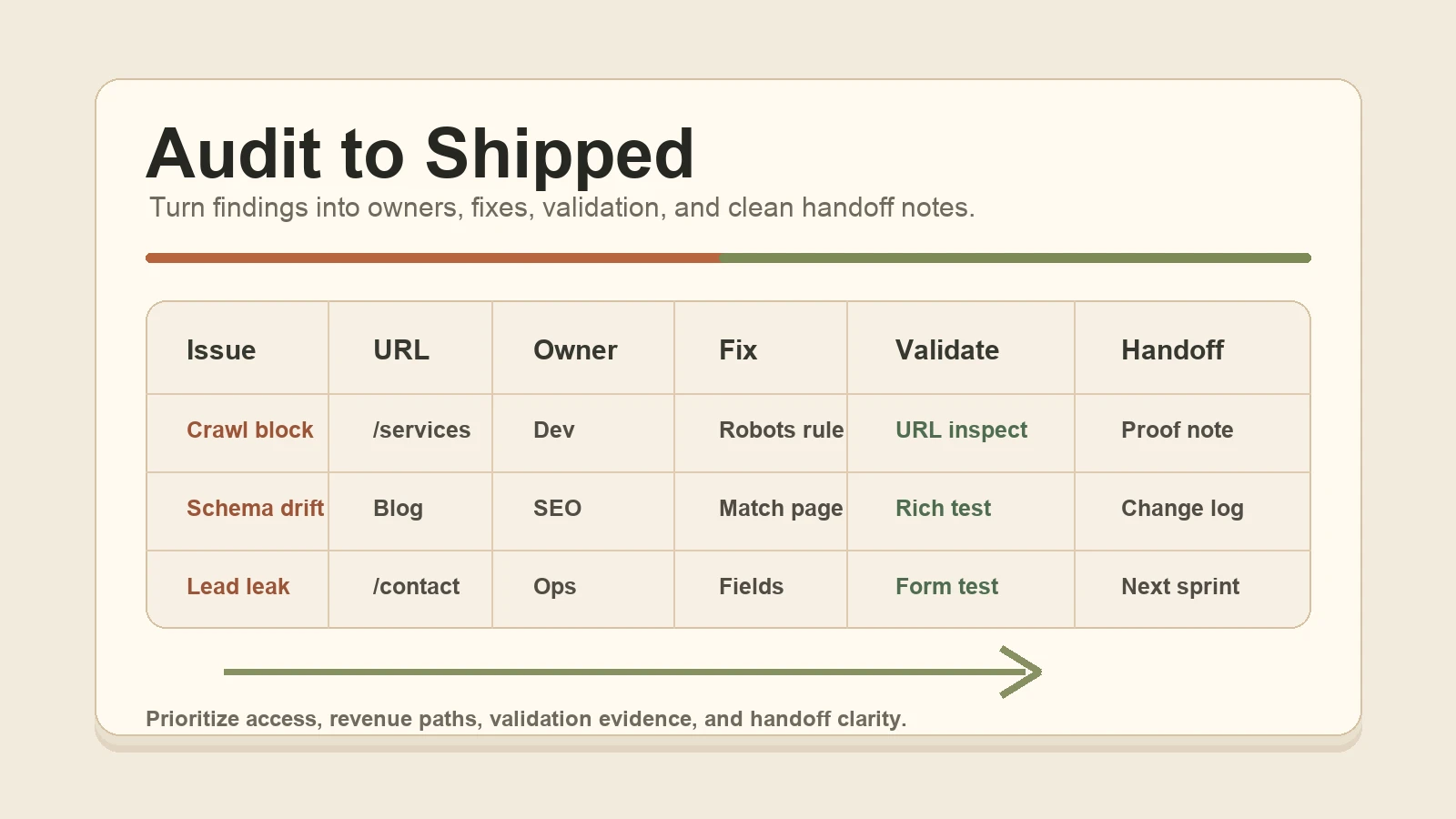
An audit only creates value when someone owns each fix, understands its dependencies, and can prove the change shipped correctly. Use this practical handoff system to assign work, order it by business impact and implementation risk, and keep findings from disappearing between teams.
Read post
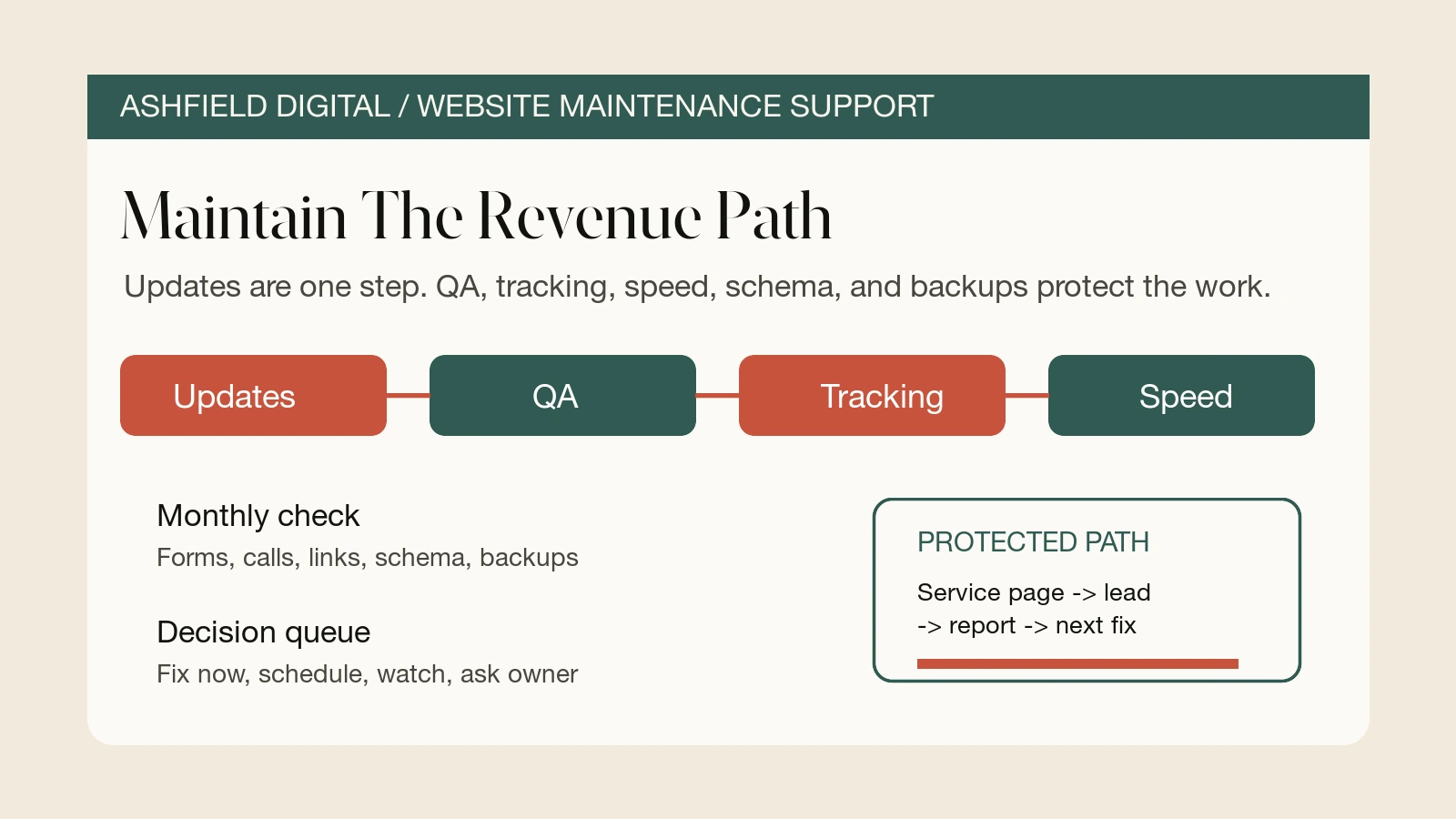
Website maintenance is often reduced to plugin updates and emergency fixes. Use this checklist to decide whether your maintenance support also protects page quality, lead paths, tracking, speed, schema, backups, and the buyer actions that actually affect growth.
Read post
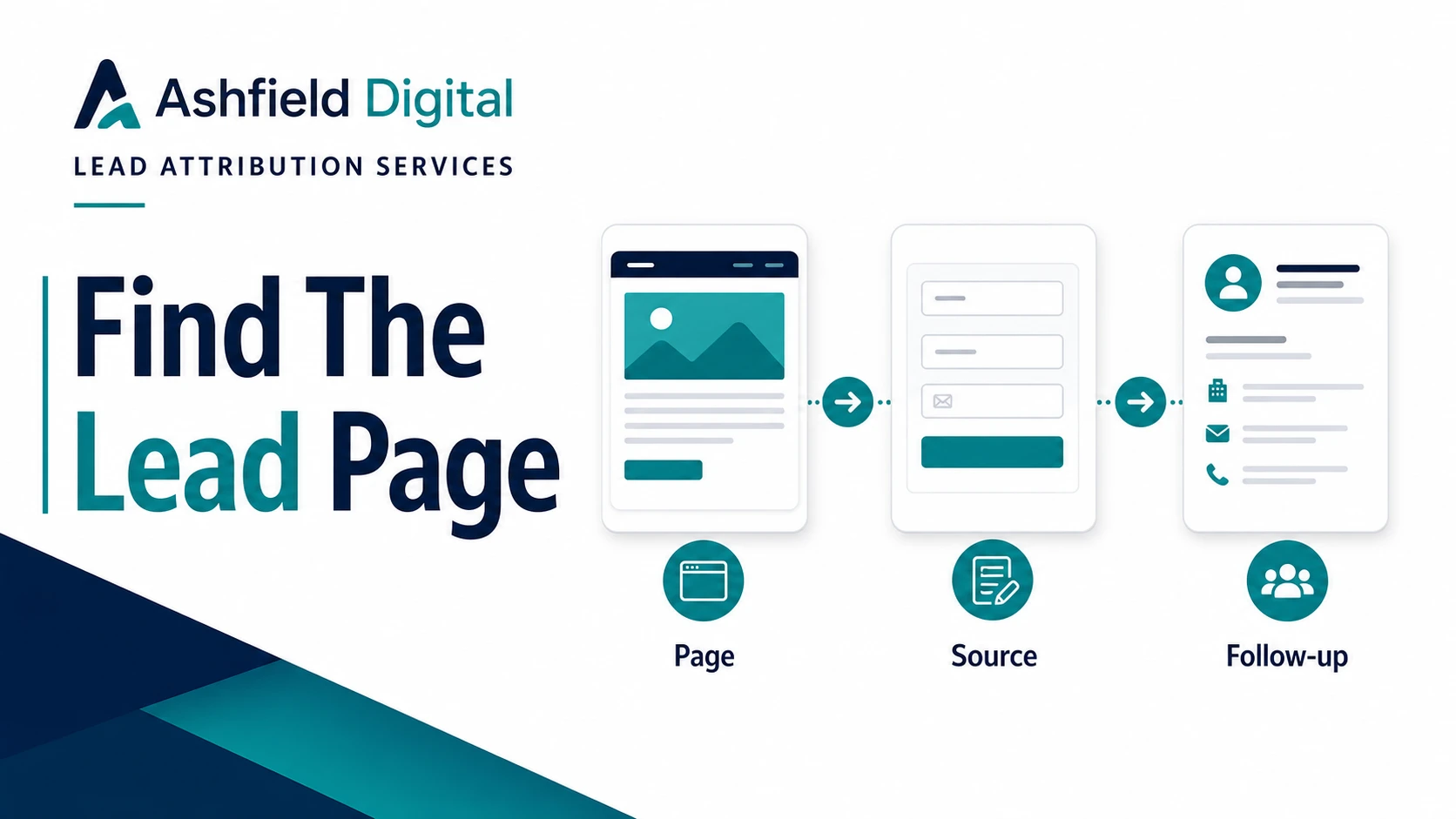
A lead is less useful when the record only says website or Google. Use this checklist to decide which page, source, campaign, form, and call fields must survive into follow-up so owners can see what helped create the inquiry.
Read post
Many local service pages are built by swapping the city name and leaving everything else alone. Use this checklist to decide which pages deserve unique proof, clearer answers, and a stronger contact path before publishing more near-duplicates.
Read post
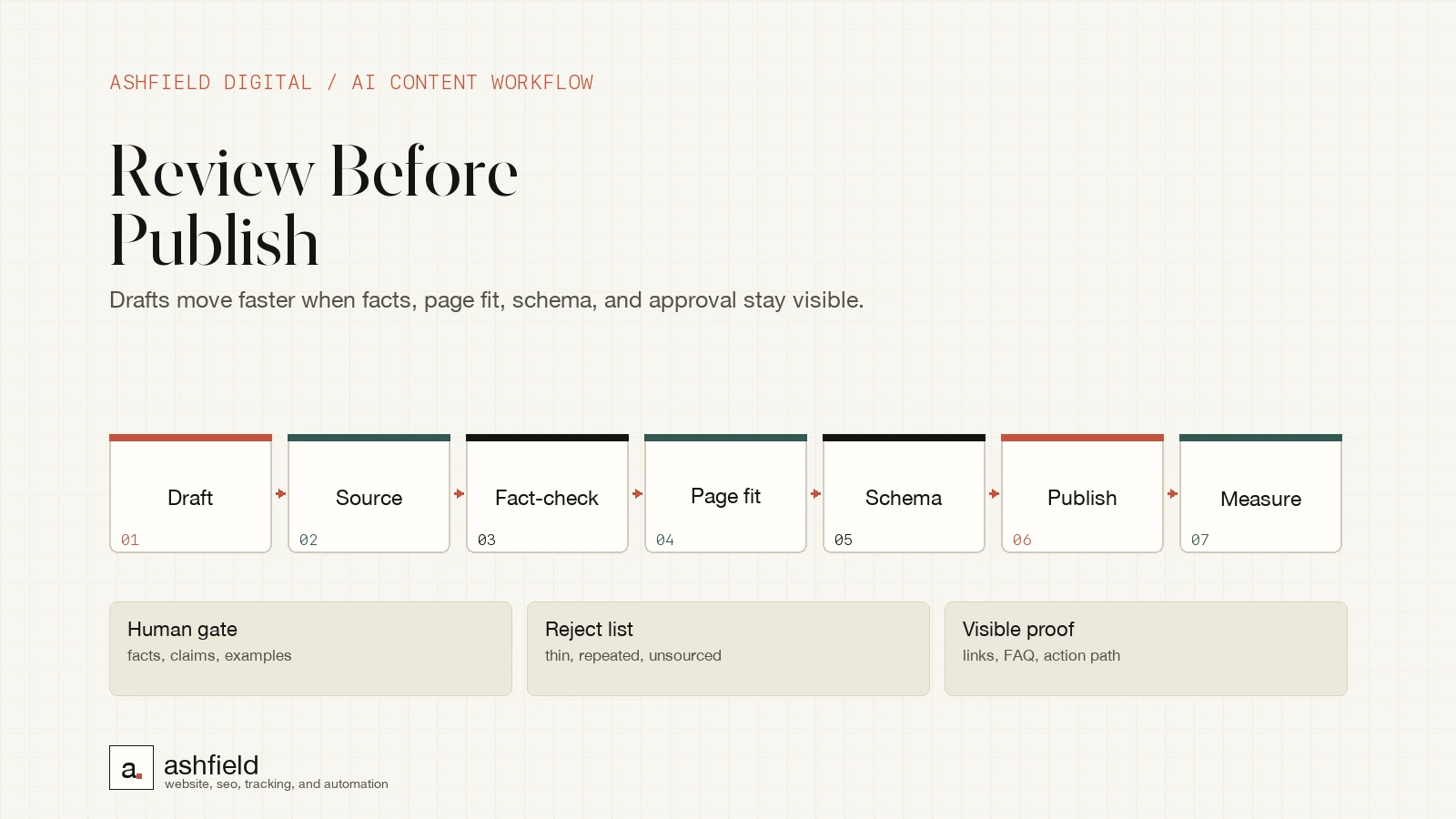
AI can speed up website updates, but it should not remove judgment from the publishing process. Use this review-gated workflow to turn drafts into useful, sourced, page-fit content.
Read post
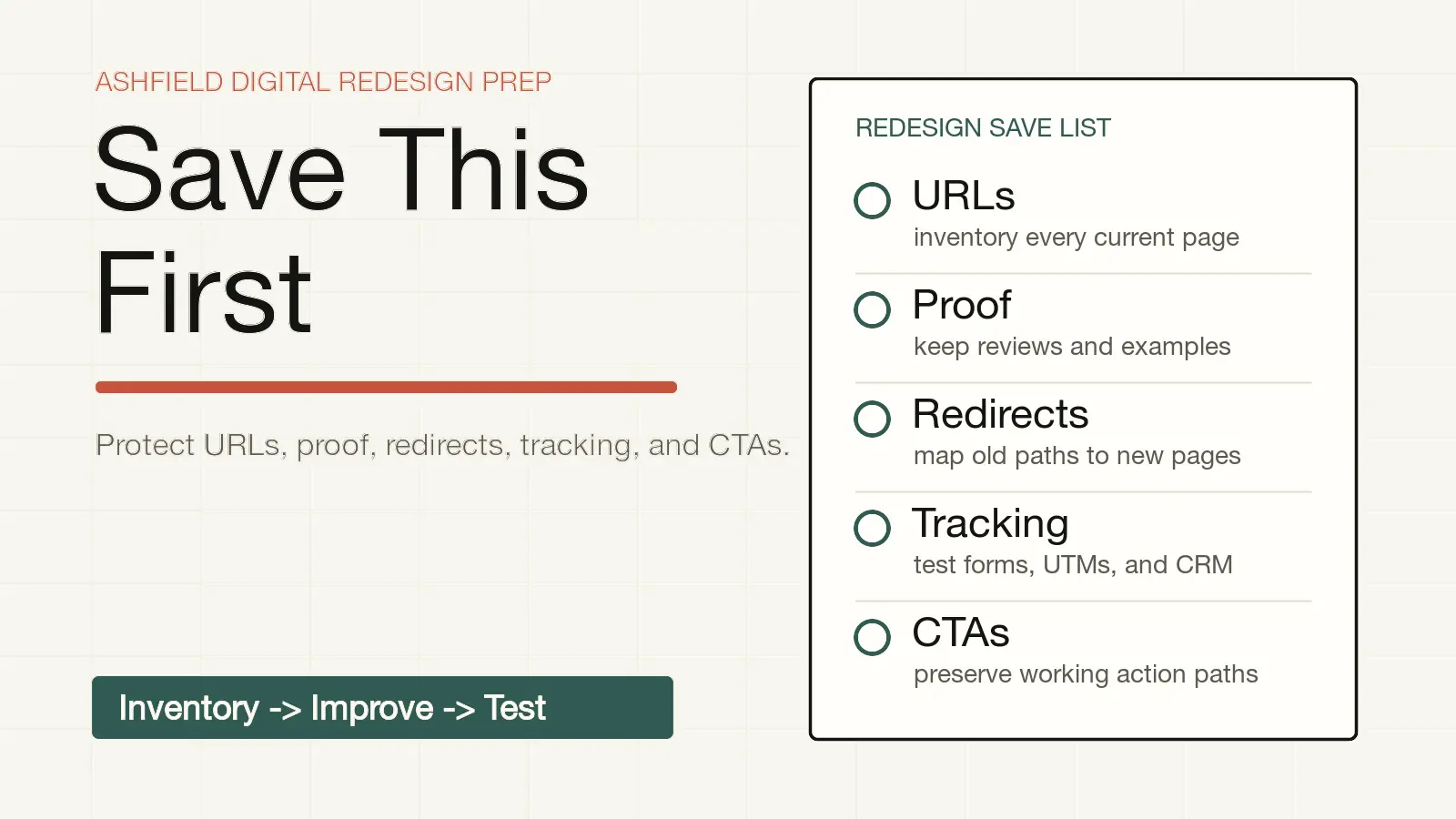
A redesign should improve the website without erasing the assets that already help searchers, buyers, and follow-up teams. Use this checklist before design or development begins.
Read post
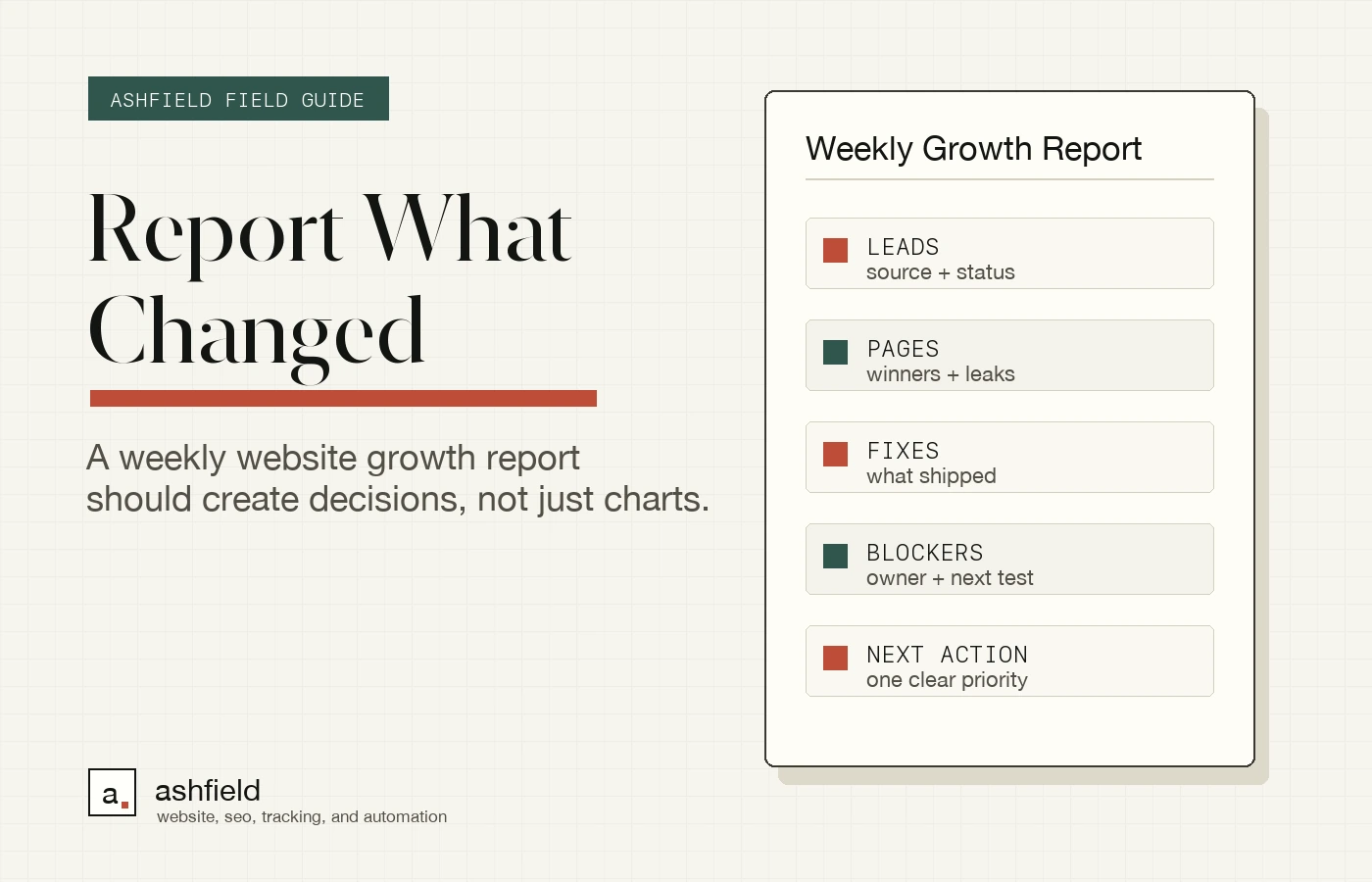
A useful weekly growth report should explain what changed, which pages and sources created leads, which fixes shipped, and what should happen next. Use this structure when reporting needs to produce decisions instead of vanity summaries.
Read post
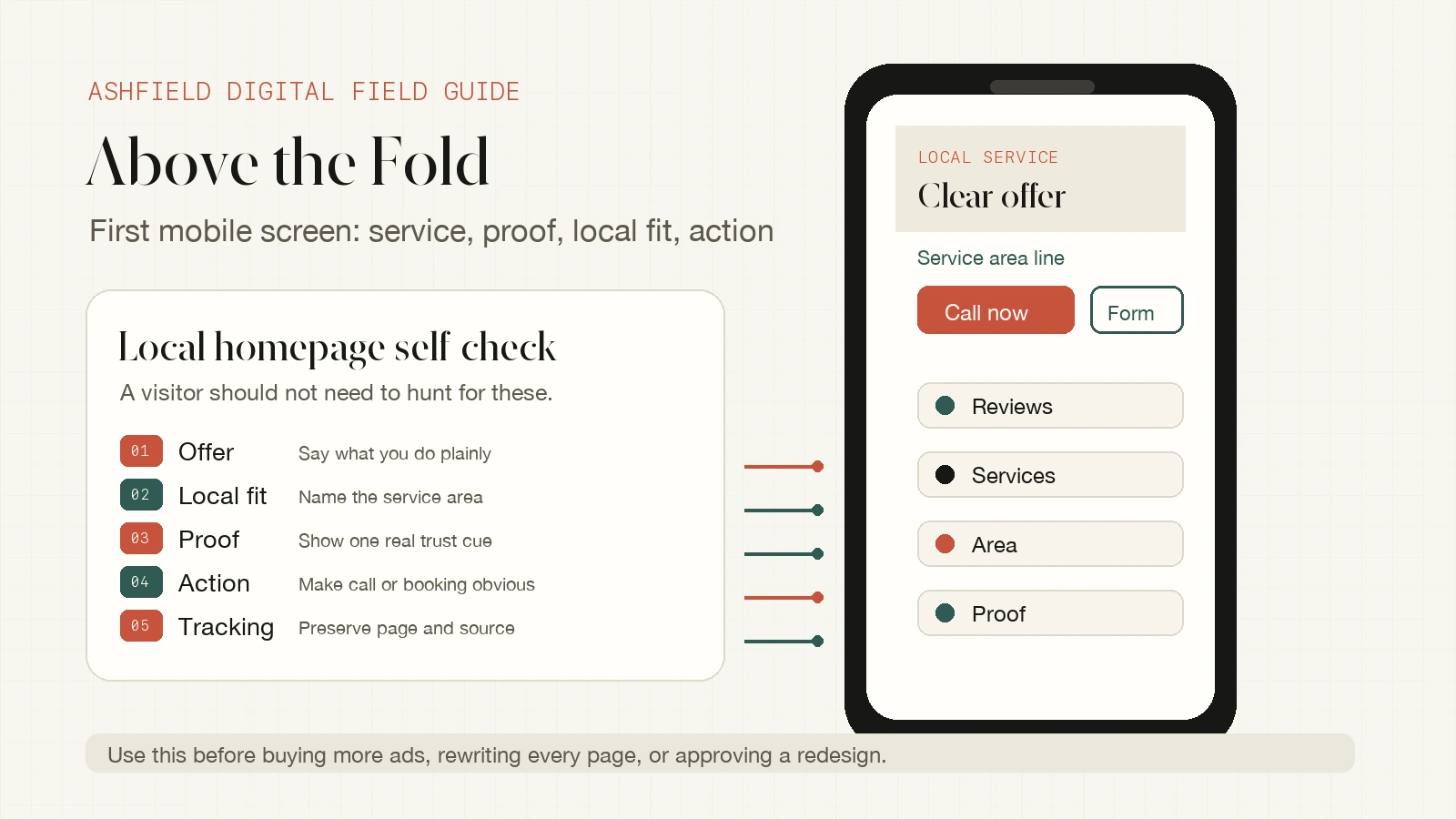
The first mobile screen should tell a local visitor what you do, where you do it, why they can trust you, and how to act. Use this checklist before redesigning the whole site.
Read post
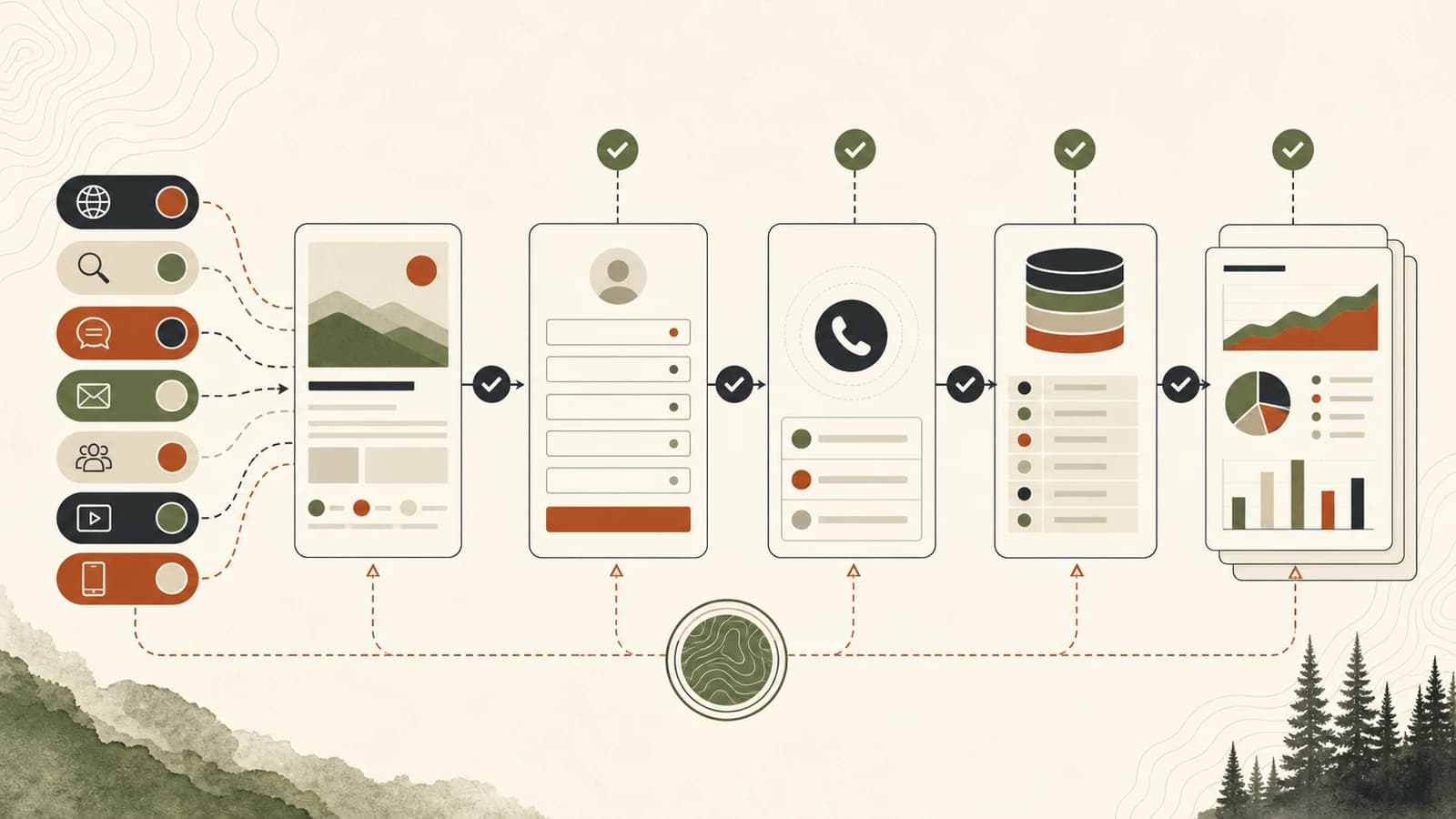
Website leads lose value when useful source context disappears before follow-up. Preserve the fields that help sales, reporting, and attribution stay honest.
Read post
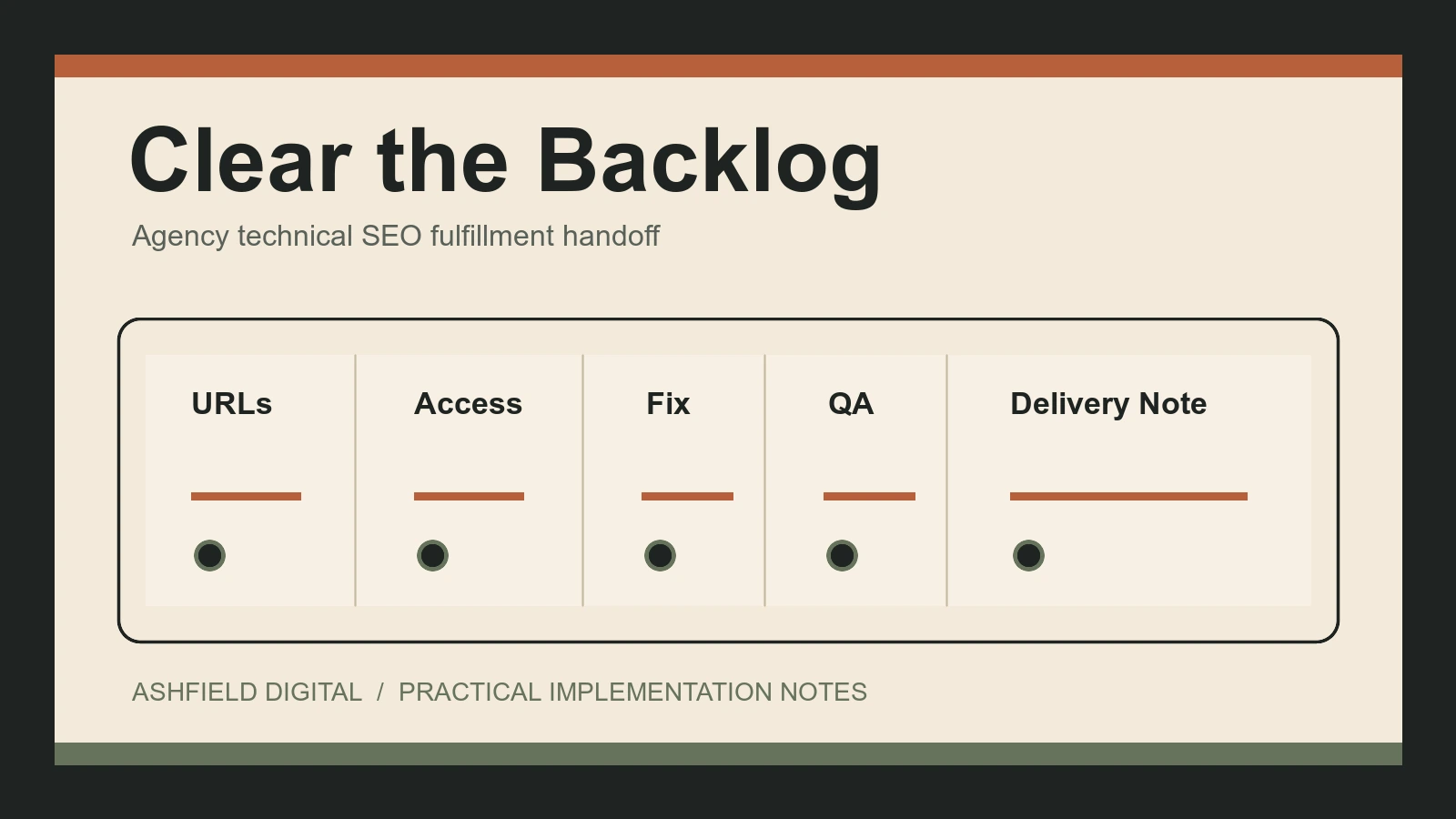
A technical SEO audit only creates value when fixes ship. Assign owners, criteria, validation, and handoff notes.
Read post
AI-search readiness starts with pages that answer real buyer questions, expose clear facts, use honest structure, and give search systems something useful to cite.
Read post
More local SEO content will not help much if mobile visitors cannot see what to do next. Start with the call path: search result, service page, proof, tap-to-call, form, and follow-up context.
Read post
Agencies do not need to hire full-time for every technical SEO backlog. They need clean delegation rules, useful handoff notes, acceptance criteria, and QA evidence.
Read post
Find leaks before ads, SEO, UX, CRM, copy, dev spend.
Read post