Why Local SEO Needs a Working Call Path Before More Content
More local SEO content will not help much if mobile visitors cannot see what to do next. Start with the call path: search result, service page, proof, tap-to-call, form, and follow-up context.
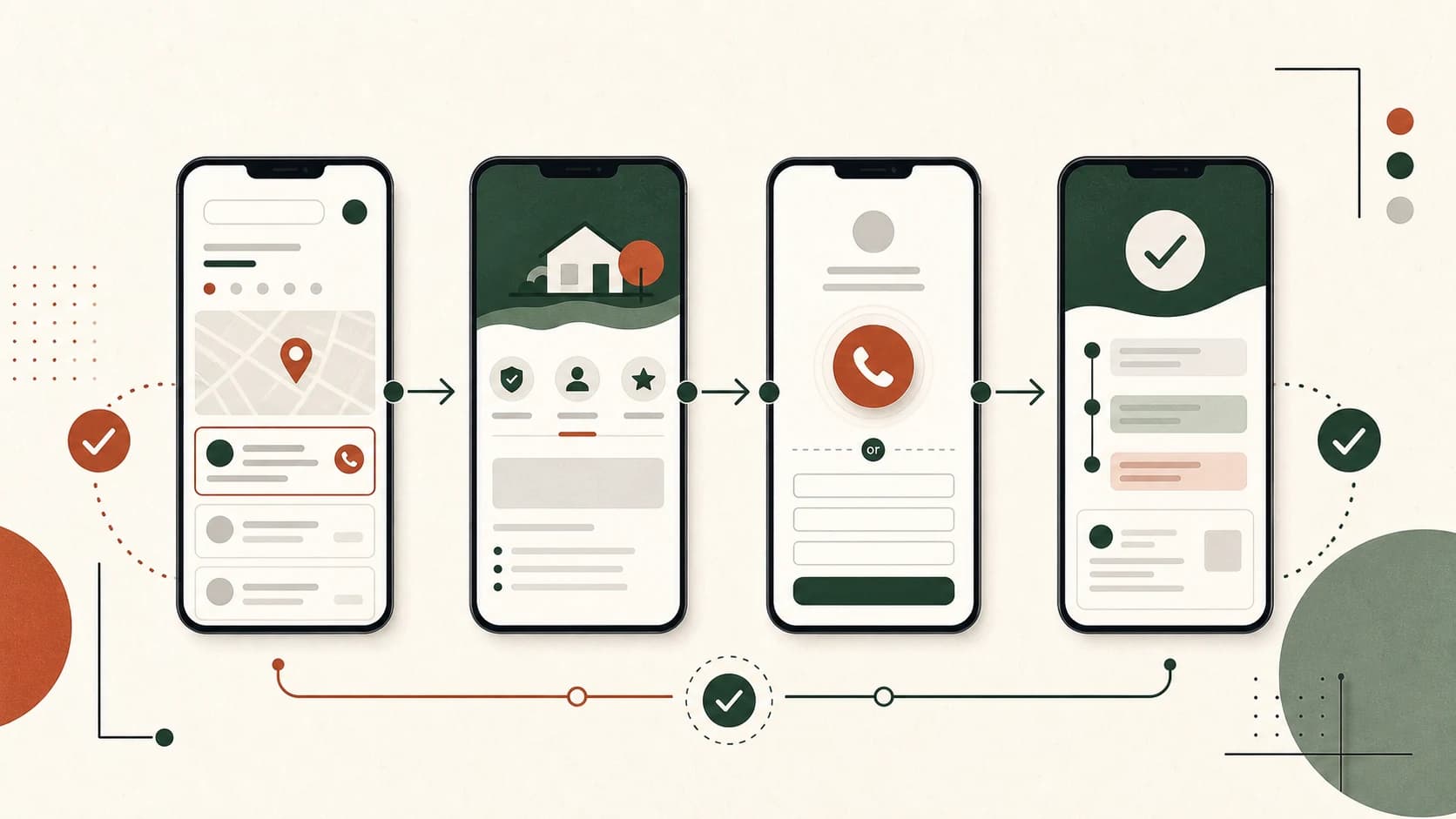
Local SEO can create demand, but the website still has to handle the moment when a nearby buyer is ready to act. That moment is often small: someone searches on a phone, opens a service page, scans for proof, and decides whether to call, submit a form, or keep looking.
If that path is messy, more content is not the first fix. It may only send more people into the same friction. The better decision is to check whether the mobile call path works before spending on more blog posts, city pages, ads, or a larger SEO retainer.
This is the practical decision task: can a real visitor move from local intent to a call or form without guessing, waiting, pinching, scrolling past vague copy, or losing source context before follow-up?
Start With The Call Path, Not The Content Count
The call path is the full route from discovery to follow-up. It includes the search result, map listing, landing page, service proof, phone button, form, tracking fields, and the way the lead reaches the person who will respond.
For a service business, that route usually looks like this:
- Search or map result: the visitor sees the business as relevant for the service and area.
- Service page: the page confirms the exact problem, service, location, and next step.
- Proof: reviews, photos, process notes, licensing context, project examples, or plain operating details reduce hesitation.
- Action: the phone button, form, booking link, or quote path works on mobile.
- Tracking: the business keeps enough source context to know which page and channel helped.
- Follow-up: the person responding can see what the visitor needed and where the lead came from.
That is the path local SEO is supposed to support. If the page hides the phone number, makes the form feel risky, or strips away source context, the business may blame rankings when the real leak is closer to the call button.
Google's mobile-first indexing guidance is a useful reminder here: the mobile version of the page matters because Google primarily uses mobile content for indexing and ranking. The operator version of that rule is even simpler. If the mobile page is the version most searchers and search systems rely on, the mobile action path deserves the first inspection.
Where Mobile Call Paths Usually Break
Most broken call paths are not dramatic. They are small points of hesitation that stack up.
Common breaks include:
- The page headline says the industry, but not the specific service the visitor searched for.
- The phone number appears only in the desktop header or footer.
- A sticky mobile button exists, but it says "Contact" instead of making the call or quote path obvious.
- The form asks too many questions before explaining response time or next steps.
- The page has no local proof above the fold.
- Reviews are buried on a separate page rather than supporting the service decision.
- The service area is vague, especially for businesses that serve multiple nearby cities.
- Tap-to-call links are not marked up as phone links or do not work reliably.
- Tracking records the lead, but not the page, source, campaign, or requested service.
None of these require a full rebrand to inspect. Open the page on a phone and act like a busy buyer. Ask whether the first screen answers four questions:
- Am I in the right place?
- Does this business handle my problem?
- Can I trust them enough to call or ask?
- What happens when I tap?
If the answer is not clear, publishing another supporting article is probably premature.
What Should Be Above The Fold
The top of a local service page does not need to be crowded. It needs to remove uncertainty. The first screen should make the service, geography, proof, and action path visible enough that a visitor can keep moving.
A useful above-the-fold check:
- Service clarity: name the specific service in plain language.
- Local relevance: mention the city, region, service area, or operating context when it matters.
- Buyer fit: show who the service is for, such as homeowners, multi-location operators, specialty shops, medical practices, or commercial teams.
- Proof: include a review cue, project cue, credential, recognizable process detail, or specific operating promise.
- Primary action: make the call, quote, booking, or contact path obvious on mobile.
- Secondary action: give cautious visitors a lower-pressure path, such as reading the process, viewing examples, or sending a short form.
For example, a weak top section says:
"Professional services for South Florida businesses. Contact us today."
A stronger version says:
"Emergency AC repair for Palm Beach County homes. Call for same-day availability or send photos for a quote. Licensed team, clear arrival windows, and repair notes after the visit."
That second version is not magic copy. It simply answers the buyer's decision questions before asking for a call.
Track The Call And The Context
Local businesses often track whether a lead arrived, but not enough context to improve the page or follow-up. A phone call is more useful when the team can see which page helped create it. A form is more useful when the notification includes what the visitor requested and how they arrived.
Useful tracking fields include:
- Landing page.
- Current page or form page.
- Referrer when available.
- UTM source, medium, campaign, term, and content.
- Requested service or category.
- Location or service area selected by the visitor.
- Form type or CTA label.
- Device type when available.
- Timestamp.
- Consent or privacy flags required by the business.
For phone paths, track tap-to-call clicks where the analytics setup allows it, and be honest about the limit: a click is not always a completed call or qualified lead. For forms, hidden fields can often preserve source and page context into the CRM, email notification, spreadsheet, or help desk.
Google Analytics enhanced measurement can automatically collect certain interactions when enabled, and custom events can be used for interactions that matter to the business. The point is not to flood reports with vanity events. The point is to keep enough context that the owner can answer, "Which pages are creating useful inquiries, and where are people falling out?"
Make Proof Part Of The Action Path
Local proof should sit close to the decision. A visitor who is deciding whether to call should not have to leave the page to learn whether the business can handle the work.
Useful proof can include:
- Specific service examples.
- Before-and-after photos when appropriate.
- Review excerpts with source context.
- Service area notes.
- Response-time expectations.
- Team credentials, licenses, certifications, or process details.
- Guarantees or limitations written plainly.
- Links to relevant case studies, resources, or supporting service pages.
Avoid fake proof. Do not invent client names, conversion numbers, awards, or statistics because they sound persuasive. Google's people-first content guidance is aligned with the business reality: useful pages should help people, not merely satisfy a search tactic.
Proof is also part of AI-search readiness. A page that clearly states the service, area, process, limitations, FAQs, and next step is easier for search systems and answer systems to understand. That does not require "LLM visibility" tricks. It requires crawlable, visible facts that a buyer would also find useful.
Use Schema To Reflect The Page, Not Rescue It
Structured data can help search systems understand page content, but it should not say things the page does not visibly support. If the page has an FAQ section, FAQ markup should match the visible questions and answers. If the page describes a local service, the page should also visibly describe the service, area, and action path.
Google's structured data guidelines are clear that markup must follow policies and represent the page accurately. In practice, that means:
- Do not mark up fake reviews.
- Do not add FAQ answers that are hidden from visitors.
- Do not claim services, locations, prices, or credentials that the page does not explain.
- Do not treat schema as a replacement for readable content.
- Validate important structured data changes before publishing.
For a local business, schema is useful after the page itself is useful. The order matters: visible page clarity first, structured support second.
What A Cleanup Sprint Should Fix First
A local SEO cleanup sprint should not start with a giant content calendar. It should start with the pages and paths closest to revenue.
Priority one is the core service page or service-area page that should generate calls now. Review it on mobile, then fix the obvious action problems:
- Clarify the service headline and first paragraph.
- Add local relevance without stuffing city names.
- Move proof closer to the call or form path.
- Make the primary phone, form, or booking action obvious.
- Test tap-to-call and form behavior.
- Preserve source and page context.
- Add internal links from relevant pages to the service page.
- Add or clean up FAQ content that answers buyer objections.
- Align structured data with visible content.
- Document what changed and how it was tested.
After that, use content to support the working path. Write resources that answer real buyer questions, link them back to the service page, and use them to clarify decisions. That is different from publishing loosely related posts because a keyword list says they exist.
Ashfield's Local SEO Action Path
Ashfield's local cleanup work starts with the path that should already create inquiries: priority service pages, mobile CTAs, proof blocks, internal links, forms, call tracking, and source context.
If the issue is page clarity and mobile conversion, start with the `/solutions/website-local-seo-cleanup-sprint` path. If the lead arrives but nobody can tell where it came from, use `/solutions/conversion-tracking-lead-attribution` to scope the tracking cleanup. If the site has broader crawl, schema, speed, or technical implementation issues, `/solutions/technical-seo-services` can sit behind the local sprint.
The first useful review is simple:
- Which page should create calls this month?
- What service and area does it need to prove?
- What happens on mobile when someone tries to call or submit a form?
- What source fields survive into follow-up?
- Which internal links currently support the page?
- What would count as fixed by the end of the sprint?
That gives the owner a better decision than "publish more content." It shows whether the business needs more pages, a cleaner page, better proof, better tracking, or a working call path first.
Sources Used For This Call Path Standard
- Google Search Central: Mobile-first indexing best practices: https://developers.google.com/search/docs/crawling-indexing/mobile/mobile-sites-mobile-first-indexing
- Google Search Central: Creating helpful, reliable, people-first content: https://developers.google.com/search/docs/fundamentals/creating-helpful-content
- Google Search Central: General structured data guidelines: https://developers.google.com/search/docs/appearance/structured-data/sd-policies
- Google Analytics Help: Enhanced measurement events: https://support.google.com/analytics/answer/9216061?hl=en
FAQ
What is a local SEO call path?
It is the route a visitor takes from a search result or map listing to a service page, phone tap, form submission, booking request, and follow-up. It includes the page content, proof, mobile layout, call button, form fields, tracking, and the handoff into sales or operations.
Should a local business publish more content before fixing calls?
Usually not if the mobile path is confusing. More content can bring more visitors to the same broken experience. Fix the core service page, tap-to-call button, form, proof, and tracking first, then use new content to support the pages that can already convert demand.
What should appear above the fold on a local service page?
A local service page should quickly show what the business does, who it helps, where it serves, why it can be trusted, and how to act. On mobile, the phone or booking path should be visible without forcing the visitor to hunt through menus, sliders, or vague brand copy.
How should calls and forms be tracked?
At minimum, preserve the landing page, current page, referrer or source, campaign fields when available, form type, requested service, and timestamp. Phone clicks can be tracked as events, and forms should carry hidden source fields into the CRM or email notification when the system allows it.
Does schema fix a weak local call path?
No. Structured data can help search systems understand page facts, but it should match visible content. It does not replace a clear mobile page, readable proof, working phone link, tested form, or a follow-up process that keeps the visitor's source context.
Keep reading
What Fail-Closed QA Means Before a Local Post Goes Live
AI and content calendars make it cheap to ship local posts. Fail-closed QA is the opposite habit: named checks that block publish when the copy would misrepresent a shop, pad a suburb, skip the call path, or invent a fact.
What Actually Moves Calls for Multi-Location Home Services (Maps, Pages, Conversion)
If call volume is flat, more blog posts are usually the wrong first move. Inspect the Maps listing a buyer actually sees, the location or service page they land on, and the tap-to-call or form path that has to finish the job.
How Multi-Location Home Service Brands Keep City Pages Distinct
A city-page farm can look like coverage while giving buyers the same thin answer in ten URLs. Use this method to approve only the markets that differ, publish what must be distinct, and keep those pages current on a weekly cadence.