How to Make Website Pages Easier for AI Search to Cite
AI-search readiness starts with pages that answer real buyer questions, expose clear facts, use honest structure, and give search systems something useful to cite.
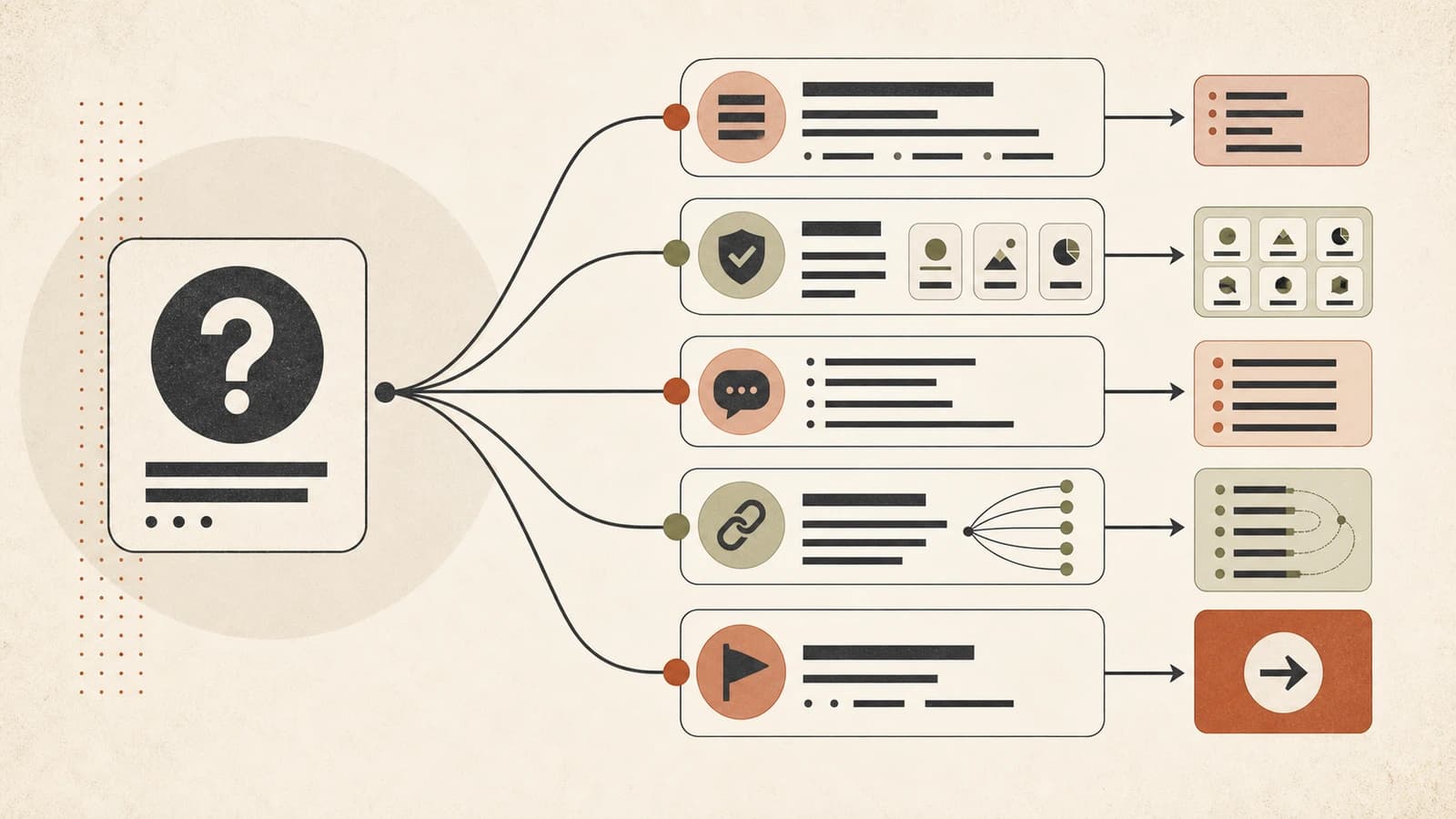
AI search does not need a new set of tricks. It needs pages that are clear enough for a person to use and structured enough for search systems to understand. That is a calmer standard than most "GEO" advice, and it is usually better for the business.
The decision for an owner is practical: should the team rewrite pages, publish new resources, add structured data, or ignore the noise until the core website works? The right answer usually starts with the pages that already support revenue: services, resources, pricing, audits, contact paths, and proof.
Google's guidance on generative AI features points back to the fundamentals. AI features in Search depend on Google's core Search systems, and the official advice is still to build useful, reliable content that can be crawled, indexed, understood, and shown to searchers. That is good news. It means AI-search readiness can be treated as implementation work, not a mystery project.
Start with the decision the page should support
A page becomes easier to cite when it knows what decision it is helping the reader make. A vague service page says "we help you grow." A useful page says who the service is for, what problem it fixes, what the work includes, what proof matters, what the next step is, and when the service is not the right fit.
For an AI-search readiness review, define the decision before touching copy:
- Should this visitor choose an audit, a cleanup sprint, a technical SEO project, or a longer retainer?
- What question brought them here?
- What facts would a search result, AI answer, or human buyer need to summarize the page accurately?
- What supporting page should this page link to next?
- What action should the reader take after the answer is clear?
That decision keeps the page from becoming a glossary. A glossary can rank for terms and still fail the buyer. A decision page answers the question behind the search and gives the reader a grounded next step.
For Ashfield, the decision might be: "Do we need an AI-search content program, or do our existing service pages need better structure, proof, and technical cleanup first?" That is a much more useful question than "How do we get mentioned by AI?"
Make the answer visible, not hidden
AI-search readiness should not create hidden text, doorway pages, or blocks of copy written only for machines. The important facts should be visible on the page, readable on mobile, and useful to the buyer.
Good visible facts include:
- The actual service, not a slogan.
- The type of business or operator the page is for.
- The symptoms that mean the service is needed.
- The work included in plain language.
- The evidence or deliverables the reader can expect.
- The limits, tradeoffs, or "not a fit" conditions.
- The next action and what happens after contact.
If a page needs FAQ schema, those questions and answers should appear on the page. If structured data describes a service, organization, article, or FAQ, it should match the visible content. Google's structured data guidelines are clear that markup should represent the page content and should not be misleading or hidden from users.
This is where many AI-search projects go sideways. The team adds schema, AI-written summaries, and repeated keyword variations while the actual service page still fails to explain the offer. Search systems cannot cite what the business itself has not made clear.
Answer the fan-out questions before the buyer leaves
AI-assisted search often exposes the next questions around the first question. A person may start with "how do I optimize for AI search" and quickly need to know whether SEO still matters, whether structured data is required, whether existing pages are eligible, what to measure, and whether an agency is selling vapor.
A good page handles that fan-out without becoming bloated. Use headings that answer the questions a buyer would naturally ask:
- What problem does this page solve?
- What has changed because of AI search?
- What has not changed?
- What should be checked first?
- What proof should the page show?
- What should the owner measure?
- What should be ignored?
Here is the operator-level example:
- Weak section: "Our AI search optimization services help brands dominate the future of search."
- Better section: "Before publishing new AI-search content, check whether your priority service pages can be crawled, answer the buyer's decision, show proof, link to supporting resources, and preserve source context when the visitor becomes a lead."
The second version gives a buyer and a search system something specific to work with. It also creates a checklist Ashfield can actually implement.
Use structured data as a confirmation layer
Structured data is useful when it clarifies content that is already visible and accurate. It is not a replacement for the page.
For an article or resource, the basic review should include:
- Article or blog metadata matches the page title, date, author, image, and description.
- FAQ schema matches visible FAQ content when FAQ markup is used.
- Organization, service, and breadcrumb facts are consistent across the site.
- Image URLs are crawlable and relevant to the page.
- No schema claims reviews, prices, services, locations, offers, or expertise that the page itself does not support.
The practical test is simple: if the structured data were removed, would the page still help the reader make the decision? If the answer is no, the page needs better content before it needs more markup.
This matters for credibility. Google's AI feature guidance and structured data policies both point back to the same base: content needs to be eligible, useful, and representative. A page cannot markup its way around weak facts.
Link the page into a real site path
A page that stands alone is harder to trust and easier to misread. Internal links tell readers and search systems how the idea fits into the business.
For this topic, the link path should be intentional:
- Link to `/resources` when the reader needs practical guides and checklists.
- Link to `/solutions/technical-seo-services` when the issue is crawlability, schema, internal links, performance, or implementation backlog.
- Link to `/audit` when the owner needs a prioritized fix list before investing.
- Link to `/solutions/conversion-tracking-lead-attribution` when the page creates leads but the source context disappears.
- Link to `/pricing` when the decision is scope: quick fix, project, retainer, or rebuild.
- Link to `/contact` only after the page has made the action path obvious.
That link structure does two jobs. It helps the reader continue the decision, and it gives the site a clearer map of service relationships. AI-search readiness should make that map cleaner, not create isolated pages chasing buzzwords.
Measure whether the page helped
Do not measure AI-search readiness only by whether a tool says the brand appears in an answer. Those snapshots can be noisy, incomplete, and hard to connect to business value. Measure the page like an operator.
Useful checks include:
- Can Google crawl and index the page?
- Are the title, description, headings, and body aligned around one decision?
- Are impressions and clicks changing for the query family in Search Console?
- Are internal clicks moving readers to the right service, audit, pricing, or contact page?
- Do form submissions preserve landing page, source, campaign, and service context?
- Do sales calls reference the page or the questions it answered?
- Did the page reduce confusion during the first conversation?
Those measurements will not prove that one AI result caused one lead. They will show whether the page is becoming a better answer asset for search, referrals, sales follow-up, and internal linking. That is the durable value.
Ashfield's action path
For Ashfield, AI-search readiness belongs inside normal website growth work. Start with the pages that already matter and make them easier to crawl, understand, cite, and act on.
The practical sequence is:
- Use `/audit` to identify weak pages, missing proof, confusing action paths, and technical access issues.
- Use `/solutions/technical-seo-services` to ship crawl, schema, internal link, performance, and implementation fixes.
- Use `/resources` to build useful supporting guides that answer real buyer questions.
- Use `/solutions/conversion-tracking-lead-attribution` when the website creates inquiries but loses source context.
- Use `/contact` when the priority pages need implementation, not another theory document.
The goal is not to make every page sound like it was written for AI. The goal is to make each important page more useful, more accurate, more connected, and easier to verify. That helps buyers. It helps Google. It helps AI-search systems. And it gives the business a page worth citing.
Sources used for this standard
- Google Search Central: Optimizing your website for generative AI features: https://developers.google.com/search/docs/fundamentals/ai-optimization-guide
- Google Search Central: AI features and your website: https://developers.google.com/search/docs/appearance/ai-features
- Google Search Central: Creating helpful, reliable, people-first content: https://developers.google.com/search/docs/fundamentals/creating-helpful-content
- Google Search Central: General structured data guidelines: https://developers.google.com/search/docs/appearance/structured-data/sd-policies
FAQ
Do AI Overviews and AI Mode need special markup?
No special AI-only markup is required. Google says generative AI features are rooted in normal Search systems, so the durable work is still useful content, crawlable pages, clear structure, accurate facts, and eligibility for Search. Structured data can help clarify visible page content, but it is not a shortcut around page quality.
What makes a page easier for AI search to cite?
A page is easier to cite when it answers a specific decision, uses clear headings, includes original examples or checklists, shows visible proof, links to supporting resources, and keeps facts easy to verify. The page should be useful to a buyer first. Search and AI systems then have cleaner material to understand and reference.
Should a business publish new AI-search pages or improve existing service pages first?
Improve the pages that already matter first: core service pages, resource pages, pricing or scope pages, and high-intent blog posts. If those pages are vague, blocked, thin, or missing proof, publishing more content creates more weak entry points. Add new pages only when a distinct buyer question deserves its own useful answer.
How should FAQ schema be used on AI-search content?
Use FAQ schema only when the questions and answers are visible on the page and genuinely help the reader. The markup should match the page content and follow Google's structured data guidelines. Do not add invisible FAQ answers, fake questions, or schema that makes claims the visible page does not support.
What should Ashfield review in an AI-search readiness audit?
Ashfield should review crawl access, indexable text, buyer questions, page structure, internal links, proof blocks, FAQ quality, structured data accuracy, conversion paths, and lead-source context. The goal is to find durable page improvements that can be shipped, not to create a separate layer of AI-search theater.
Keep reading
What Fail-Closed QA Means Before a Local Post Goes Live
AI and content calendars make it cheap to ship local posts. Fail-closed QA is the opposite habit: named checks that block publish when the copy would misrepresent a shop, pad a suburb, skip the call path, or invent a fact.
What Actually Moves Calls for Multi-Location Home Services (Maps, Pages, Conversion)
If call volume is flat, more blog posts are usually the wrong first move. Inspect the Maps listing a buyer actually sees, the location or service page they land on, and the tap-to-call or form path that has to finish the job.
How Multi-Location Home Service Brands Keep City Pages Distinct
A city-page farm can look like coverage while giving buyers the same thin answer in ten URLs. Use this method to approve only the markets that differ, publish what must be distinct, and keep those pages current on a weekly cadence.